From One Rule
to the Universe
Scroll through three centuries of discovery. Watch a single idea absorb them all.
↓Scroll to draw the timeline↓
Newton's Laws
The first attempt to find universal rules. Brilliant — but required a preferred background.
Newton's mechanics described the universe with extraordinary precision, but it required an absolute space — a fixed backdrop against which all motion was measured. This 'preferred background' is precisely what the relativity principle forbids.
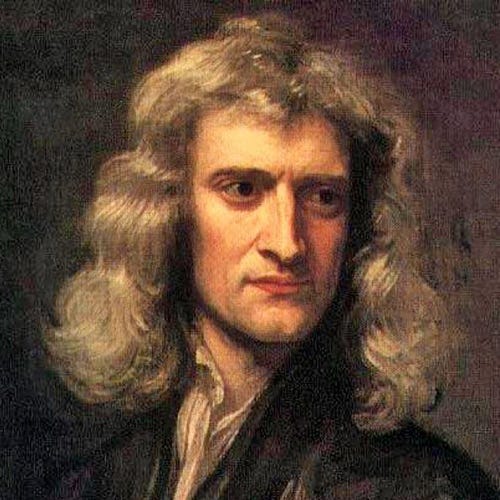
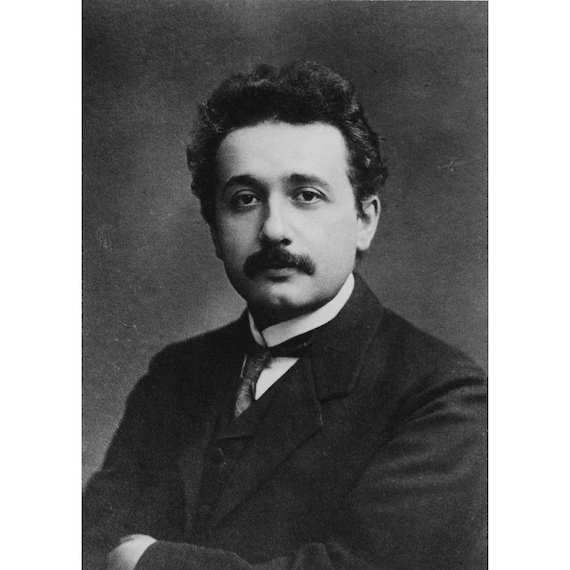
Einstein's Special Relativity
Two assumptions. A revolution. But why two?
Einstein needed two postulates: (1) the relativity principle, and (2) the speed of light is constant for all observers. The second was necessary because he could not derive it from the first. This paper shows the second follows from the first.
Einstein's General Relativity
Ten years of additional work to derive gravity.
General relativity required three more postulates: the equivalence principle, general covariance, and the Newtonian limit. Each was an additional assumption. This paper shows the first two are consequences of the algebra.
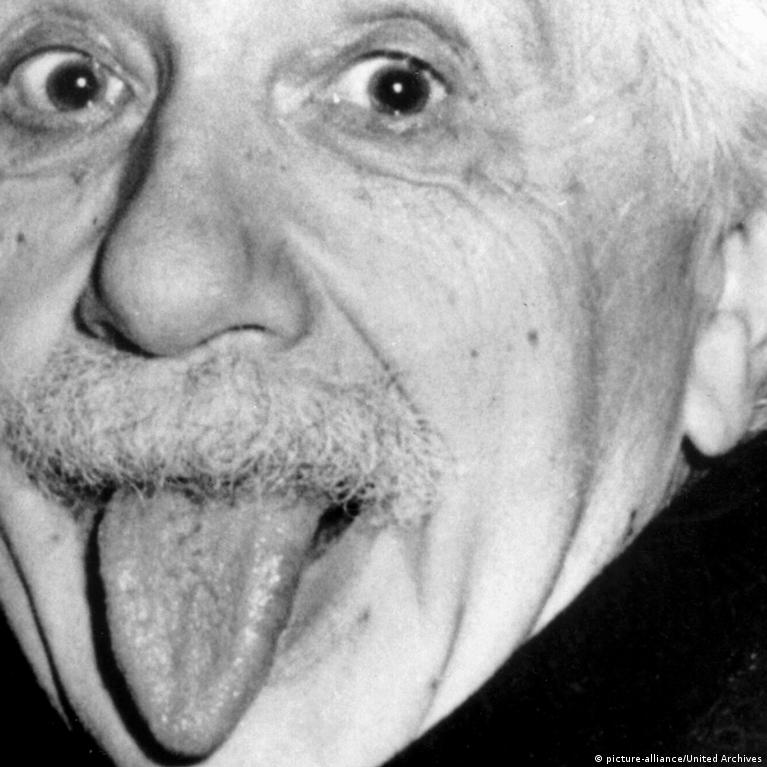
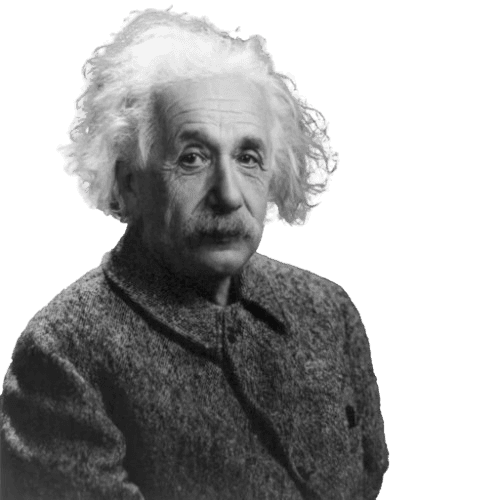
Einstein Introduces Λ
He called it his greatest blunder. It wasn't.
Einstein introduced the cosmological constant Λ to make his field equations compatible with a static universe. When Hubble showed the universe was expanding, Einstein withdrew it. But Λ > 0 follows necessarily from the algebra — and was confirmed in 1998.
Einstein's Postulate Paper
He sensed one rule was enough — but couldn't prove it.
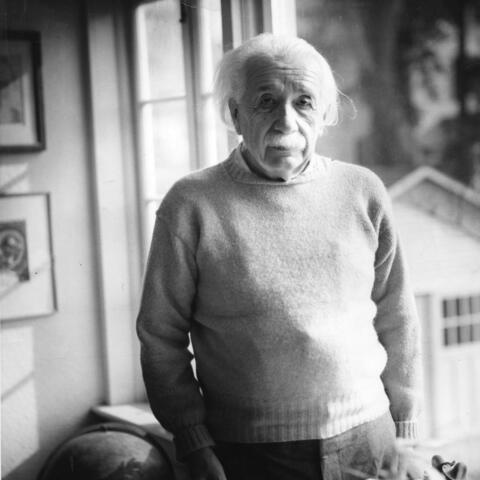
"The supreme task of the physicist is to arrive at those universal elementary laws from which the cosmos can be built up by pure deduction." Einstein wrote this in 1918 — expressing the hope that this paper fulfils mathematically 106 years later.
Noether's Theorems
The conservation laws that underpin all of physics — and the key step this paper relies on.
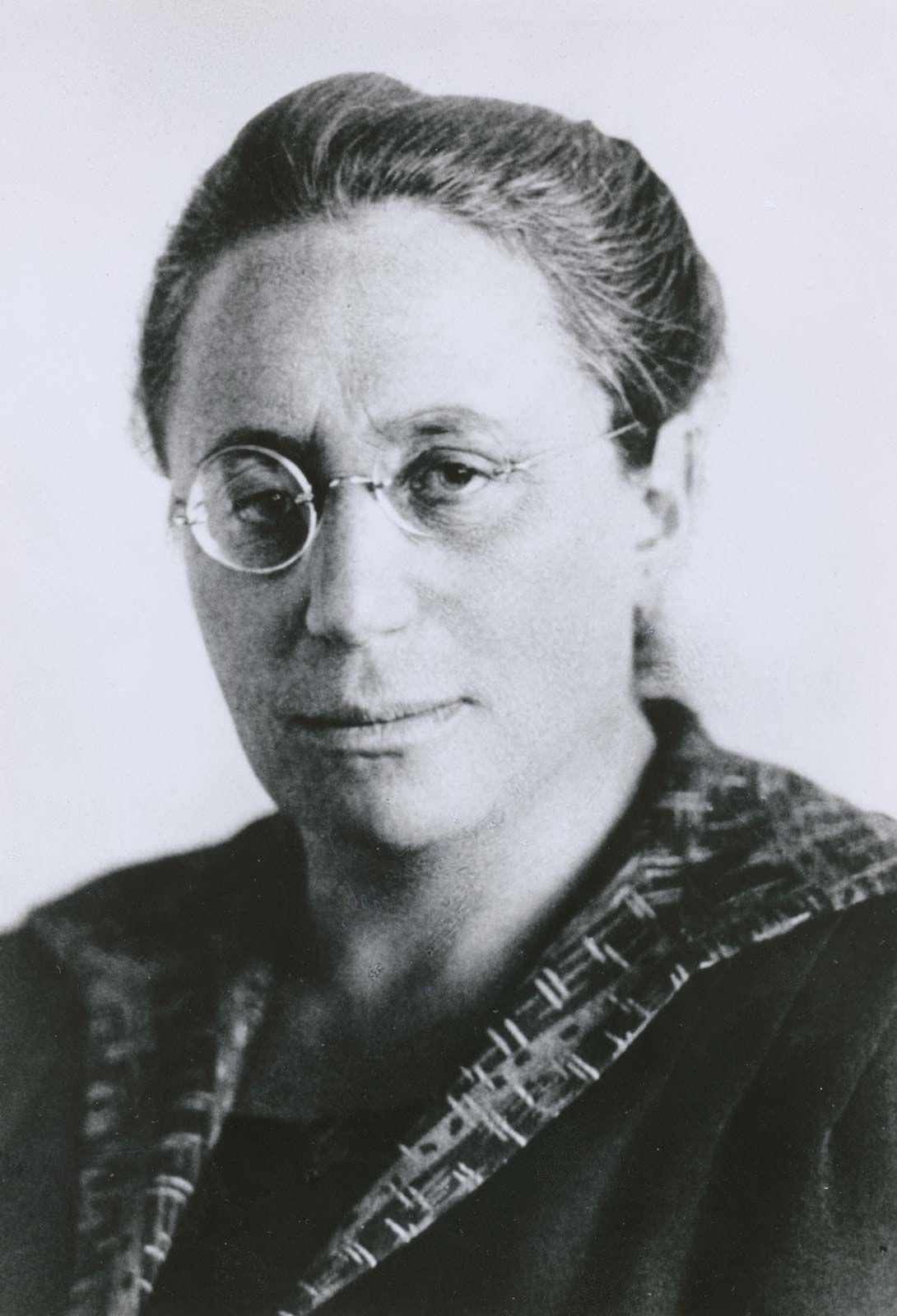
Emmy Noether proved two theorems that reshape how we understand conservation laws. Her second theorem — that gauge symmetries yield identities, not currents — is what this paper uses: the action's invariance under diffeomorphisms gives the Bianchi identity ∇νGμν = 0, forcing ∇νTμν = 0. Every particle follows geodesics regardless of composition. The equivalence principle is a consequence, not an assumption. Her first theorem establishes the Noether charges — energy, momentum, angular momentum, and boost charges — as a single multiplet of SO(4,1).
Bacry & Lévy-Leblond
The mathematical toolkit that makes this paper possible.
Henri Bacry and Jean-Marc Lévy-Leblond classified all possible kinematic Lie algebras — the complete set of ways inertial frames can be related. Their classification (1968) provides the mathematical framework this paper uses to show the de Sitter algebra is the only valid choice.

Cosmic Acceleration Confirmed
Λ > 0 confirmed. Einstein's 'blunder' was right all along.
Adam Riess and colleagues observed distant Type Ia supernovae and found the universe's expansion is accelerating — requiring a positive cosmological constant. This confirmed what the algebra had already demanded: Λ > 0.
LIGO Detects Gravitational Waves
A consequence derived in this paper — not assumed.
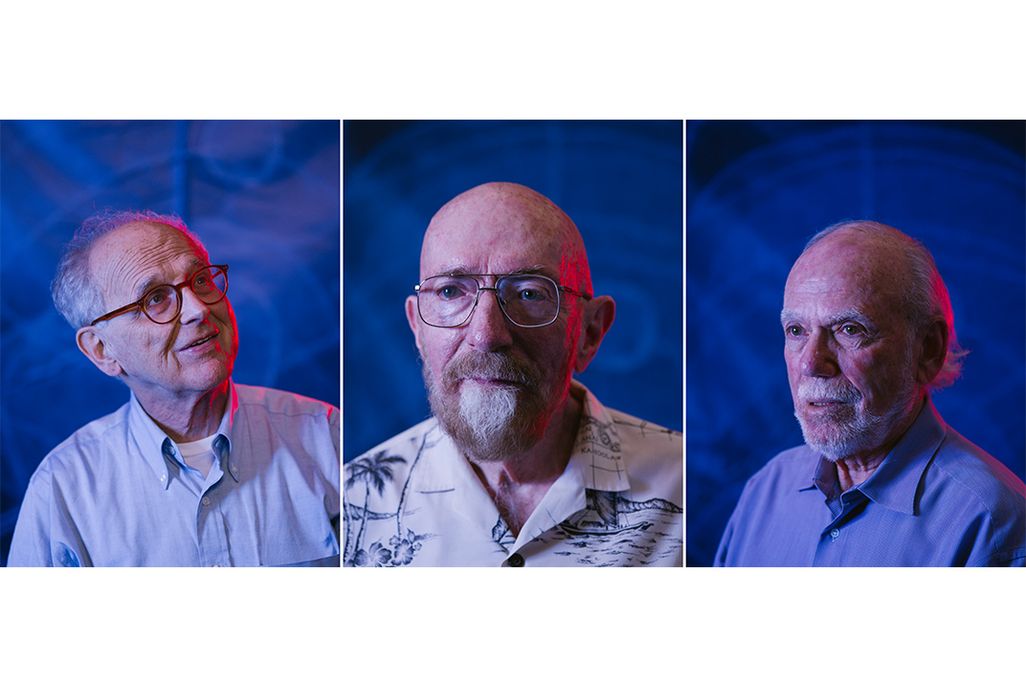
The LIGO collaboration detected gravitational waves from a binary black hole merger — confirming a prediction of general relativity. But this paper shows gravitational waves are a consequence of the algebra itself: linearised vacuum on de Sitter gives two spin-2 polarisations propagating at speed V.

Intelligent Relativity
One postulate. Everything derived.
This paper by Intelligent Internet proves that the relativity principle alone — without any additional assumptions — determines D = 4, κ > 0, Λ > 0, the Lorentz transformation, E = mc², the field equations of general relativity, the equivalence principle, gravitational waves, and the expansion of the universe.
One postulate. Everything derived.